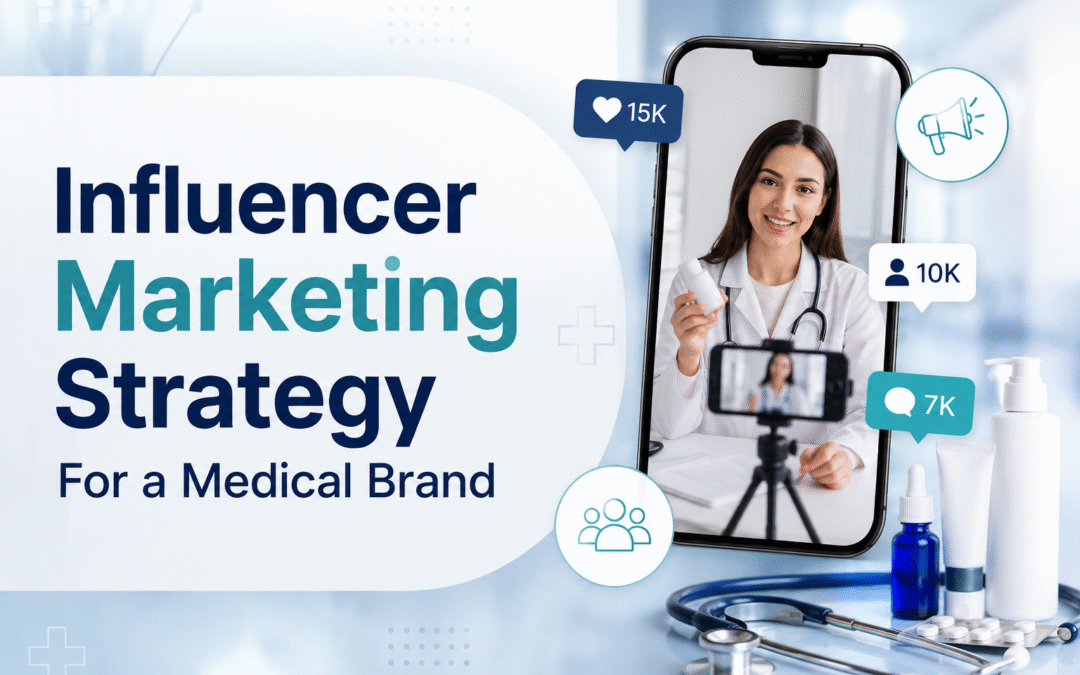
A healthcare influencer marketing strategy should begin with a clear communication goal, a defined audience, and careful selection of the people who will represent the message. The strategy should then move through content planning, influencer outreach, campaign management, audience engagement, and measurement. Healthcare influencer marketing requires more care than ordinary consumer promotion because medical and wellness information can be technical, personal, or sensitive. The purpose is not simply to attract attention. It is to communicate useful information clearly through a suitable voice while supporting the organization’s wider public relations and marketing objectives.
What Is Healthcare Influencer Marketing?
This approach involves working with an individual who has an established and relevant relationship with an audience. This may be a healthcare professional, wellness creator, health educator, or another voice with a genuine connection to the subject.
A campaign may be used to explain a healthcare service, raise awareness, introduce a product, support an event, or reach a particular group. The influencer becomes another communication channel within the organization’s wider objectives.
Why Does Influencer Marketing Matter in Healthcare?
People often discover health and wellness information through digital channels. Social media gives healthcare organizations another way to reach audiences outside traditional media.
An appropriate influencer can present a message in a familiar format. Popularity alone does not establish relevance. A smaller creator may be more useful for relevant audiences.
Public trust also matters. A message that is unclear or poorly matched to its audience can create confusion. Influencer activity should therefore support communication rather than become an isolated promotional exercise.
How to Build the Strategy?
1. Begin With a Clear Communication Objective
Start by deciding what the campaign needs to achieve. The objective could be awareness, education, service visibility, event promotion, or relevant enquiries.
The objective should guide the audience, influencer, content format, and measurements. This foundation keeps campaigns focused.
2. Know the Audience Before Choosing an Influencer
Define the audience before beginning the influencer search. Consider location, age, interests, healthcare concerns, information needs, and social media behavior.
For organizations considering influencer marketing in Singapore, local audience understanding is particularly useful. A creator who already communicates with the intended Singapore audience may be more relevant than someone with a much larger international following.
Audience research makes influencer comparison more practical. The question is who already communicates with the intended audience.
3. Select for Relevance and Credibility
Follower numbers are only one part of the selection process. Review the creator’s subject area, audience profile, engagement, content quality, communication style, previous collaborations, and suitability for the organization.
Consider:
- Relevance to the healthcare topic and intended audience
- Audience location, demographics, and engagement
- Quality and consistency of published content
- Communication style and credibility
- Alignment with the organization and its reputation
- Ability to explain information clearly
For healthcare marketing campaigns, the person communicating the message needs to be appropriate for the subject. Someone suitable for a general lifestyle campaign may not be the right choice for a medical topic.
4. Make Influencer Outreach Clear
After identifying potential influencers, explain the campaign purpose, expected content, timing, key messages, and practical requirements. The organization should understand the influencer’s audience and communication style, while the influencer should understand the healthcare brand’s objective.
Clear communication at this stage can reduce confusion and unnecessary revisions later.
5. Develop Content for the Audience
Healthcare teams often work with detailed information and specialist terminology. The public may not have the same background. Content should therefore be developed so that the intended audience can follow the message without losing its important meaning.
A video, interview, educational post, event feature, or discussion may be suitable, provided the content remains useful and appropriate.
The influencer should have room to communicate naturally. Direction should not make the final content sound like a technical document.
6. Give the Influencer the Right Material
Good content depends on preparation. Influencers should receive background information, campaign objectives, key messages, supporting material, timing, content requirements, and a suitable contact for questions.
Clear guidance helps keep communication consistent and reduces misunderstandings.
7. Manage the Campaign Beyond the First Post
Publishing is only one part of the process. The relationship, campaign schedule, content, and audience response should continue to be managed. Healthcare audiences may ask questions about services or subjects raised in the content, so organizations need a suitable response process.
Potence PR influencer management service covers influencer sourcing, engagement, content provision, management, social media enquiry management, and preparation of replies for approval. This shows why influencer work needs active management rather than being treated as one sponsored post.
Talk to Potence PR About Influencer Marketing
How Should the Campaign Be Measured?
Measurement should connect to the objective established at the beginning. An awareness campaign may focus on reach and impressions. An engagement campaign may examine interactions, comments, and shares. A campaign intended to encourage enquiries may look at website visits, enquiries, leads, or conversions.
There is no single measure of success. A post can receive substantial attention without reaching the people the organization needs to communicate with, while a smaller campaign can produce useful enquiries from a relevant audience.
Comments and questions can also show what people understood and where more explanation may be needed.
When Should You Work With an Influencer Marketing Agency?
An influencer campaign can involve research, selection, outreach, negotiation, content coordination, management, enquiry handling, and measurement. For a healthcare organization, these tasks also need to fit within its wider communications plan.
An influencer marketing agency can bring the different stages together instead of leaving influencer activity as a separate social media task.
Potence PR describes itself as a public relations agency for the medical and wellness industry. Its services include medical public relations strategies, media relations, marketing communication strategies, social media campaign development and execution, corporate communications, crisis management, and influencer marketing.
The agency also emphasizes understanding medical terminology and sensitive medical and health information.
Explore Potence PR’s Healthcare PR Services
How Does Influencer Marketing Fit Into Social Media?
Influencer activity can work alongside wider social media marketing services. A healthcare organization may use social channels for information, public relations for media attention, and influencers for a specific audience. Each channel can support the same communication direction.
An influencer campaign should therefore sit within a wider marketing communication strategy so that influencer content, social posts, and PR activity remain consistent.
For organizations exploring influencer marketing in Singapore, local relevance should still fit the wider communication plan.
Building a More Effective Strategy
A practical strategy starts with the communication objective. Define the audience, identify the right voice, establish expectations, prepare useful content, and manage the relationship.
Measure the outcome against the reason the campaign was created, rather than relying on surface-level numbers.
Healthcare marketing can support a broader public relations and social media plan when handled carefully. The objective is to communicate with the right people through an appropriate voice.
A Healthcare Strategy Built Around Communication
The most useful strategy is built around a clear purpose, an appropriate audience, and a communicator who can make the subject understandable.
For healthcare organizations, that foundation matters. Medical and wellness communication deserves careful planning. With appropriate selection, content, outreach, management, and measurement, influencer activity can become part of the wider communication effort.
Frequently Asked Questions
What is healthcare influencer marketing?
It is the use of relevant influencers to communicate medical, health, or wellness messages to a defined audience. A campaign may support awareness, education, engagement, service communication, or another stated objective.
How should a healthcare organization choose an influencer?
Look at audience relevance, location, engagement, content quality, communication style, credibility, and alignment with the organization. Follower numbers should be considered, but they should not determine the decision on their own.
Is influencer marketing suitable for healthcare organizations in Singapore?
It can be, provided the campaign has a clear purpose and the influencer suits the intended audience. Local market understanding can support better selection and content decisions.
What can an influencer marketing agency manage?
An agency may support influencer research, selection, outreach, engagement, content coordination, relationship management, audience enquiries, and measurement.
Can influencer marketing work with other social media marketing services?
Yes. It can complement social media content, public relations, media relations, and other marketing communication work while maintaining a consistent message.
Meta Title: Healthcare Influencer Marketing Strategy for Medical Brand
Meta Description: Learn how to build a successful Healthcare Influencer Marketing strategy for your medical brand. Reach the right audience, build trust, and drive growth.